Netty-11-EventLoop

1 类图关系

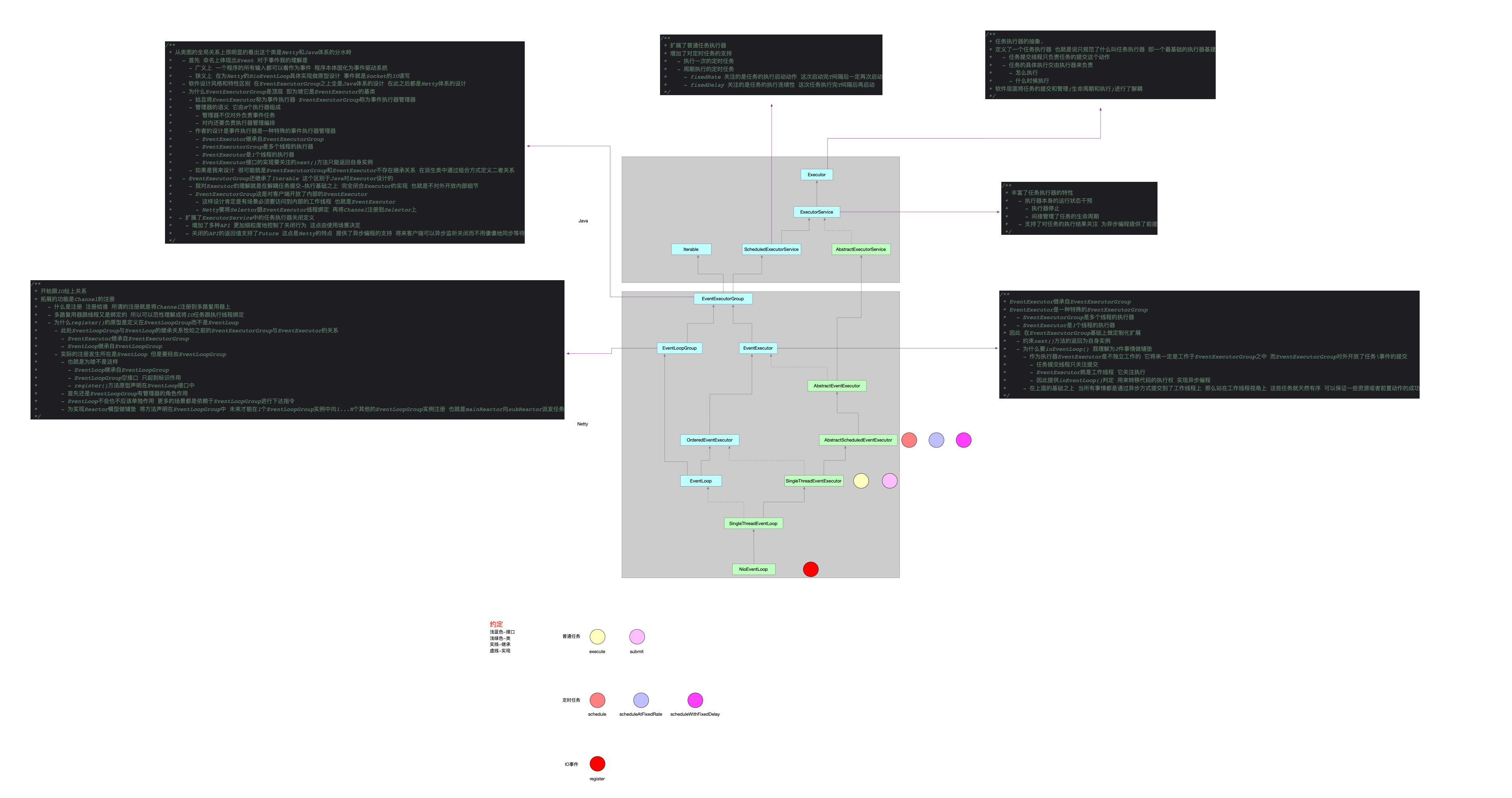
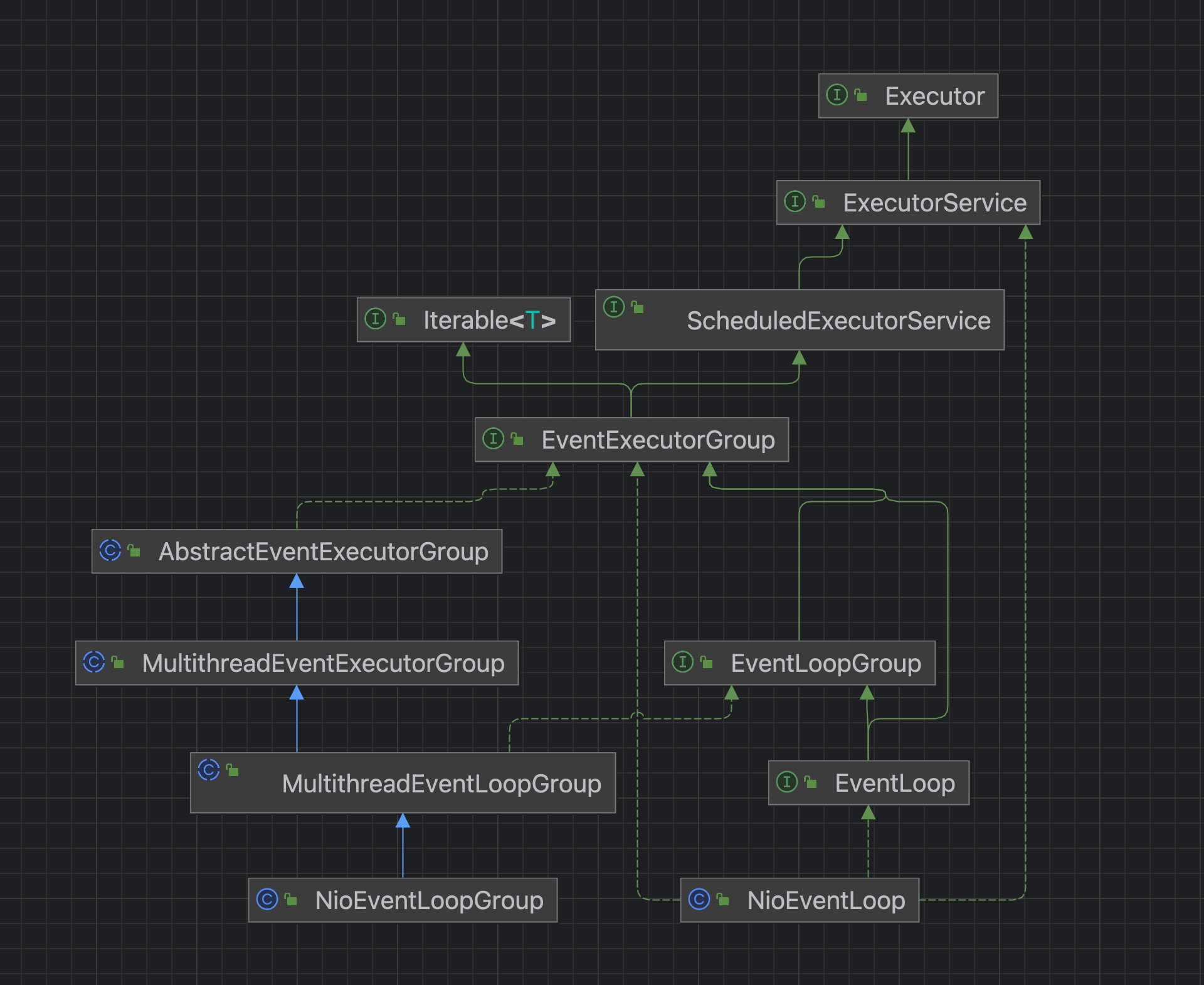
Netty中NioEventLoopGroup组件和NioEventLoop组件比较重要,二者关系像是皮毛关系:

  • NioEventLoopGroup是皮
  • NioEventLoop是毛

从上面的类图可以看出来,NioEventLoopGroup和NioEventLoop追根溯源都派生自EventLoopGroup。

  • NioEventLoopGroup充当的角色更多的是对NioEventLoop的管理,NioEventLoopGroup负责对外。
  • NioEventLoop充当的角色是任务执行。
  • 甚至二者的继承关系可以粗略理解为EventLoop是特殊的EventLoopGroup。

因此,梳理组件实现的时候,切入口最好选择NioEventLoopGroupNetty-12-EventLoopGroup,在此之前先宏观理解一下NioEventLoop的设计。

2 NioEventLoop抽象设计

记住EventLoop是持有Java的线程的,那么线程被调度执行的入口方法才是核心

3 构造

1
2
3
4
5
6
7
8
9
10
11
12
13
14
15
16
17
18
19
20
21
22
23
24
25
26
27
28
29
30
31
32
33
34
35
36
37
38
39
40
41
42
43
44
45
46
47
48
49
50
51
52
53
54
55
56
57
58
59
60
61
62
63
/**
* 构造方法的访问修饰符是默认的 只能在同包级别下访问 也就是说不对外暴露
* 当前类属性赋值
* - selectorProvider 提供创建当前OS的多路复用器实例
* - selectStrategy 定义了Selector多路复用器1次select操作下如何处理任务
* - selector 基于Java原生Selector优化的版本
* - unwrappedSelector Java原生Selector
* @param parent NioEventLoopGroup实例 标识着NioEventLoop归谁管理
* @param executor 任务执行器 ThreadPerTaskExecutor的实例 负责执行任务 逻辑关系上是跟NioEventLoop绑定的
* @param selectorProvider 负责创建IO多路复用器 SelectorProvider::provider
* @param strategy DefaultSelectStrategyFactory.INSTANCE 负责Selector多路复用器1次select操作如何选择任务(IO任务\普通任务)
* @param rejectedExecutionHandler RejectedExecutionHandlers.reject() 定义了NioEventLoop中taskQueue任务队列满了怎么办
* @param taskQueueFactory 定义了如何创建taskQueue任务队列->null
* @param tailTaskQueueFactory 定义了如何创建tailTaskQueue任务队列->null
*/
NioEventLoop(NioEventLoopGroup parent,
Executor executor, // 线程执行器 将线程和EventLoop绑定
SelectorProvider selectorProvider, // Java中IO多路复用器提供器
SelectStrategy strategy, // 正常任务队列选择策略
RejectedExecutionHandler rejectedExecutionHandler, // 正常任务队列拒绝策略
EventLoopTaskQueueFactory taskQueueFactory, // 非IO任务
EventLoopTaskQueueFactory tailTaskQueueFactory // 收尾任务
) {
/**
* 为什么要用MPSC队列
* - 为什么要用队列这个数据结构
* - FIFO特性
* - Netty是NioEventLoop线程:任务=1:N 所以从任务视角来看 任务有先后
* - 为什么不是用现有的数据结构比如ArrayBlockingQueue\LinkedBlockingQueue\PriorityQueue
* - 首先得保证线程安全
* - 其次它们的生产者\消费者模型是N:N
* - 但是Netty中现在场景是1个NioEventLoop工作线程 N个任务 也就是生产者:消费者=N:1
*/
super(parent, // NioEventLoop归属的NioEventLoopGroup
executor,
false,
newTaskQueue(taskQueueFactory), // 非IO任务队列 Netty对队列数据结构的优化
newTaskQueue(tailTaskQueueFactory), // 收尾任务队列
rejectedExecutionHandler
); // 调用父类构造方法
/**
* IO多路复用器提供器 用于创建多路复用器实现
*/
this.provider = ObjectUtil.checkNotNull(selectorProvider, "selectorProvider");
/**
* 定义了将来Selector的1次select怎么处理任务
* - IO任务怎么处理
* - taskQueue任务队列中任务怎么处理
*/
this.selectStrategy = ObjectUtil.checkNotNull(strategy, "selectStrategy");
/**
* 开启NIO中的组件Selector
* 通过上面提供的selectorProvider创建适配当前OS平台的Selector多路复用器实现
* 意味着NioEventLoopGroup这个线程池中每个线程NioEventLoop都有自己的selector
*/
final SelectorTuple selectorTuple = this.openSelector();
/**
* 创建NioEventLoop绑定的selector对象
* 初始化了IO多路复用器
*/
this.selector = selectorTuple.selector; // Netty优化过的IO多路复用器
this.unwrappedSelector = selectorTuple.unwrappedSelector; // Java原生的多路复用器
}

4 怎么接收任务的

API 实现类
execute SingleThreadEventExecutor
submit AbstractEventExecutor
schedule AbstractScheduledEventExecutor
scheduleAtFixedRate AbstractScheduledEventExecutor
scheduleWithFixedDelay AbstractScheduledEventExecutor
register SingleThreadEventLoop

提交的普通任务都将缓存在taskQueue这种队列中。

5 线程的创建

1
2
3
4
5
6
7
8
9
10
11
12
13
14
15
16
17
18
19
20
21
22
23
24
25
26
27
28
29
30
31
32
33
34
35
36
37
38
39
40
41
42
43
/**
* 有任务提交过来希望被执行
* EventLoop本质是跟Java的线程1:1映射的 而且EventLoop只有一个线程 所以意味着这个线程只会启动一次
* 创建线程的时机就是在任务提交过来的时候
* - java向cpp创建线程
* - cpp向os创建线程 并且告诉os这个线程的entry point是哪儿 对应着java的一个函数
* - 等线程被cpu调度起来后就会顺着entry point回调到java里面的这个函数
* 所以在EventLoop中用inEventLoop作为标识线程是不是已经创建了 保证只有一个线程 不会重复创建
*/
private void execute(Runnable task, boolean immediate) {
/**
* NioEventLoop只有一个线程 且它的阻塞点只有在IO多路复用器操作上
* 因此当前添加任务的线程
* - NioEventLoop线程自己给自己添加任务 说明它压根没有被阻塞 而且肯定已经处于运行中状态
* - 这个线程已经被创建执行 那么这个新添加的任务被放到了非IO任务队列中 迟早会被取出来执行
* - 不是NioEventLoop线程 是其他线程往NioEventLoop添加任务
* - 如果NioEventLoop线程还没被创建执行 那么相当于任务裹挟着线程进行延迟创建并执行任务
* - 非IO任务队列没有任务 也没有IO事件到达时 NioEventLoop线程迟早会阻塞在复用器上
* - 阻塞期间有IO事件到达 退出select阻塞继续工作
* - 有定时任务还可能超时退出select NioEventLoop线程继续工作
* - 没有定时任务就永远阻塞 唤醒的方式 只有外部线程往NioEventLoop添加新任务触发selector复用器的wakeup()
*/
boolean inEventLoop = super.inEventLoop();
this.addTask(task); // 添加任务到taskQueue中 如果任务队列已经满了 就触发拒绝策略(抛异常)
if (!inEventLoop) {
// NioEventLoop线程创建启动的时机就是提交进来的第一个异步任务 在这个方法里面创建线程并为线程的调度指定好entry point
this.startThread();
if (this.isShutdown()) {
boolean reject = false;
try {
if (removeTask(task)) reject = true;
} catch (UnsupportedOperationException e) {
// The task queue does not support removal so the best thing we can do is to just move on and
// hope we will be able to pick-up the task before its completely terminated.
// In worst case we will log on termination.
}
if (reject) reject();
}
}

// NioEventLoop中线程阻塞点有且只有一个是在复用器上 因此addTaskWakesUp为false
if (!addTaskWakesUp && immediate) this.wakeup(inEventLoop); // 唤醒阻塞的线程 这个wakeup(...)方法在子类NioEventLoop中特定的实现(借助复用器进行唤醒阻塞在复用器上的线程)
}

6 线程的运行模型

1
2
3
4
5
6
7
8
9
10
11
12
13
14
15
16
17
18
19
20
21
22
23
24
25
26
27
28
29
30
31
32
33
34
35
36
37
38
39
40
41
42
43
44
45
46
47
48
49
50
51
52
53
54
55
56
57
58
59
60
61
62
63
64
65
66
67
68
69
70
71
72
73
74
75
76
77
78
79
80
81
82
83
84
85
86
87
88
89
90
91
92
93
94
95
96
97
98
99
@Override
protected void run() {
int selectCnt = 0; // 当前EventLoop事件循环器代表的线程执行复用器select空轮询操作计数(Java对EPoll多路复用的实现缺陷 以阻塞方式执行复用器select 在没有读写事件时可能也会返回 产生空轮询 导致CPU负载)
for (;;) {
try {
int strategy;
try {
/**
* strategy这个值只有3种情况 决定复用器如何执行(阻塞/非阻塞)
* - 非IO任务队列为空->-1->复用器即将以阻塞方式执行一次看看有没有IO任务
* - 非IO任务队列(常规任务队列taskQueue+收尾任务队列tailTasks)有任务 复用器以非阻塞方式执行一次看看有没有IO任务
* - 没有IO事件->0
* - 有IO事件->Channel数量
*
* 这样设计的方式是不要让复用器阻塞调用导致非IO任务不能及时执行
* 也就是尽可能多执行IO任务和非IO任务
*/
strategy = this.selectStrategy.calculateStrategy(this.selectNowSupplier, super.hasTasks());
switch (strategy) {
case SelectStrategy.CONTINUE: // -2
continue;

case SelectStrategy.BUSY_WAIT: // -3
// fall-through to SELECT since the busy-wait is not supported with NIO

case SelectStrategy.SELECT: // -1 任务队列为空 将线程阻塞在复用器上 唤醒时机有两种情况(阻塞期间有IO事件到达 阻塞指定事件后主动结束阻塞开始执行定时任务)
long curDeadlineNanos = super.nextScheduledTaskDeadlineNanos(); // 定时任务队列中下一个待执行定时任务还有多久可以被唤醒执行 -1表示没有定时任务可以执行
if (curDeadlineNanos == -1L) curDeadlineNanos = NONE; // nothing on the calendar // 边界情况 没有定时任务要执行
this.nextWakeupNanos.set(curDeadlineNanos); // 下一次啥时候将线程唤醒
try {
if (!super.hasTasks()) strategy = this.select(curDeadlineNanos); // select()方法阻塞 超时时间是为了执行可能存在的定时任务 如果没有定时任务就将一直阻塞在复用器的select()操作上等待被唤醒
} finally {
// This update is just to help block unnecessary selector wakeups
// so use of lazySet is ok (no race condition)
nextWakeupNanos.lazySet(AWAKE);
}
// fall through
default:
}
} catch (IOException e) {
// If we receive an IOException here its because the Selector is messed up. Let's rebuild
// the selector and retry. https://github.com/netty/netty/issues/8566
rebuildSelector0();
selectCnt = 0;
handleLoopException(e);
continue;
}
selectCnt++; // 复用器select次数 但是疯狂自增的场景只会发生在没有非IO任务 本应该阻塞在复用器上的线程却一直select时 也就是空轮询
cancelledKeys = 0;
needsToSelectAgain = false;
final int ioRatio = this.ioRatio; // 默认值是50
boolean ranTasks; // 标识taskQueue中任务都被执行过一轮
if (ioRatio == 100) { // 100->先处理IO任务 再执行非IO任务
try {
if (strategy > 0) this.processSelectedKeys(); // 处理IO任务
} finally {
// Ensure we always run tasks.
ranTasks = super.runAllTasks(); // 处理所有的非IO任务
}
} else if (strategy > 0) { // 不是100 先保证处理完所有IO任务 如果此时非IO任务很多(还是把所有非IO任务都执行完 耗时很多的话) 可能导致新到的IO任务不能得到及时处理 所以通过IoRatio参数控制非IO任务的处理时长
final long ioStartTime = System.nanoTime(); // 记录IO任务处理开始时间
try {
this.processSelectedKeys(); // 处理IO任务
} finally {
// Ensure we always run tasks.
// 计算耗时 IO任务处理耗时
final long ioTime = System.nanoTime() - ioStartTime;
/**
* 计算非IO任务可以处理的时长 限定非IO任务处理时间 处理非IO任务
*/
ranTasks = super.runAllTasks(ioTime * (100 - ioRatio) / ioRatio);
}
} else
ranTasks = super.runAllTasks(0); // This will run the minimum number of tasks 非IO任务处理时间形参为0 但是内部实现对超时统计是有条件的 因此至少一次超时统计内这个时间段的非IO任务可以有机会处理

if (ranTasks || strategy > 0) selectCnt = 0;
else if (this.unexpectedSelectorWakeup(selectCnt)) selectCnt = 0; // 任务判定可能发生了空轮询 如果发生了空轮询场景 就通过重建复用器方式尽量避免再次发生空轮询
} catch (CancelledKeyException e) {
// Harmless exception - log anyway
} catch (Error e) {
throw e;
} catch (Throwable t) {
handleLoopException(t);
} finally {
// Always handle shutdown even if the loop processing threw an exception.
try {
if (isShuttingDown()) {
closeAll();
if (confirmShutdown()) return;
}
} catch (Error e) {
throw e;
} catch (Throwable t) {
handleLoopException(t);
}
}
}
}

Netty-11-EventLoop
https://bannirui.github.io/2026/08/09/Netty/Netty-11-EventLoop/
作者
dingrui
发布于
2026年8月9日
许可协议